Mastering verb tenses is crucial for effective communication in English. This comprehensive guide provides a structured approach to understanding and utilizing various verb tenses, from the foundational present to the nuanced future. We will explore the intricacies of each tense, examining their different forms, applications, and common uses in various contexts.
From simple present tense descriptions to complex past perfect continuous narratives, this guide will equip you with the knowledge and examples necessary to confidently employ these essential grammatical tools. We will also delve into the often-tricky realm of irregular verbs, equipping you with the tools to avoid common mistakes.
Introduction to Verb Tenses
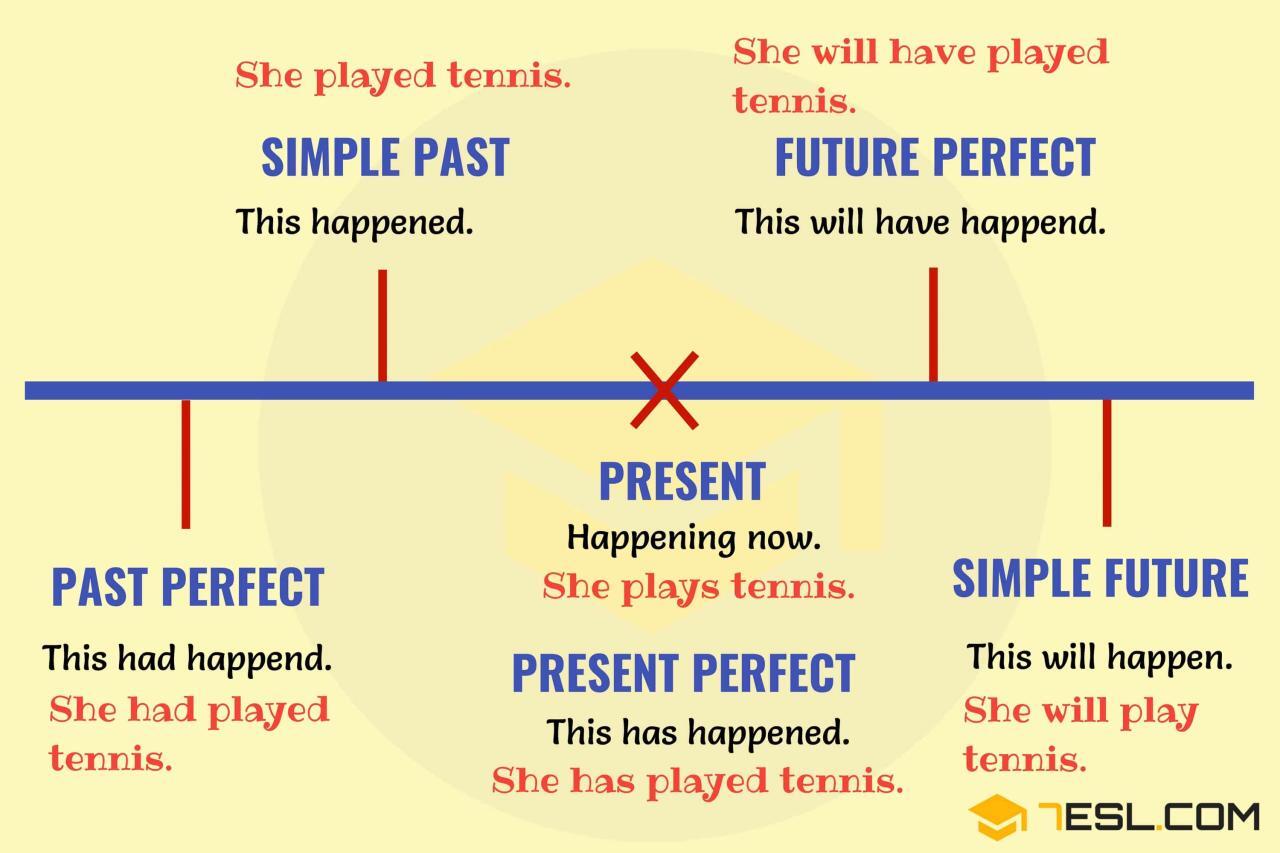
Verb tenses are crucial components of English grammar, enabling us to express when an action or state of being occurred or will occur. They provide vital context, allowing the reader or listener to understand the timing and duration of events described. Mastering verb tenses is essential for clear and effective communication in English.Understanding verb tenses allows for precise expression of time relationships, whether describing a past event, an ongoing present action, or a future plan.
This understanding is fundamental to conveying meaning accurately and avoiding ambiguity.
Categories of Verb Tenses
Verb tenses are categorized based on the time frame they describe. The most common categories include present, past, and future tenses. Each tense has specific forms to indicate different aspects of time.
| Tense Category | Description | Example |
|---|---|---|
| Present Tense | Used to describe actions happening now, habitual actions, or general truths. | I eat breakfast every morning. The sun rises in the east. |
| Past Tense | Used to describe actions that have already occurred. | Yesterday, I went to the park. She lived in London for five years. |
| Future Tense | Used to describe actions that will occur in the future. | Tomorrow, I will go to the library. We are going on vacation next week. |
Present Tense
The present tense is used for a variety of situations, including expressing habitual actions, general truths, and actions happening at the moment of speaking. For example, the statement “The Earth revolves around the Sun” is a general truth, and it is expressed in the present tense. Similarly, a person saying “I am writing a report now” uses the present tense to describe an action happening concurrently with the speech.
Past Tense
The past tense is employed to describe actions that have already been completed. For instance, the sentence “I finished my homework last night” utilizes the past tense to indicate an action that occurred in the past. This tense also encompasses past habits, completed events, or descriptions of a situation that existed in the past.
Future Tense
The future tense is used to express actions that will take place at a time later than the present. An example is “We will travel to Europe next year,” which describes an action that is scheduled for a future time. This tense encompasses plans, predictions, and intentions for the future.
Present Tense
The present tense is a fundamental aspect of English grammar, allowing us to describe actions happening now, habits, and general truths. Understanding its various forms and applications is crucial for effective communication. This tense is used to express a wide range of situations, from ongoing activities to habitual actions and timeless facts.
Present Simple Tense
The present simple tense describes habitual actions, routines, general truths, and states of being. It is used to express actions that occur regularly or are generally true.
The structure of the present simple tense typically uses the base form of the verb for most subjects, except for the third-person singular (he, she, it), which adds an -s or -es ending.
Example: I work, She works, They study.
Examples of use include:
- Describing daily routines: I wake up at 7 am every day.
- Expressing general truths: The sun rises in the east.
- Stating facts: My name is John.
- Expressing habitual actions: She goes to the gym every Tuesday.
Present Continuous Tense
The present continuous tense describes actions happening at the time of speaking. It is formed using the present tense of the verb “to be” (am, is, are) plus the -ing form of the verb.
It is used to express actions in progress now or during a specific period around the time of speaking.
Example: I am working, She is working, They are working.
Examples of use include:
- Describing ongoing actions: He is playing video games now.
- Expressing temporary situations: We are staying at a hotel this week.
- Making arrangements: I am meeting John later today.
- Expressing annoyance or impatience: She is constantly complaining.
Present Perfect Tense
The present perfect tense describes actions that began in the past and continue to have relevance in the present. It emphasizes the result or consequence of the past action in the present.
The present perfect tense uses the present tense form of the verb “to have” (have, has) plus the past participle of the main verb.
Example: I have worked, She has worked, They have worked.
Examples of use include:
- Describing experiences: I have traveled to many countries.
- Expressing actions completed recently: She has just finished her homework.
- Stating results or consequences: They have built a new house.
- Expressing a period of time up to the present: I have lived in this city for five years.
Present Perfect Continuous Tense
The present perfect continuous tense describes actions that began in the past and continue up to the present, emphasizing the duration of the action.
The present perfect continuous tense uses the present perfect tense form of the verb “to be” (have been, has been) plus the -ing form of the main verb.
Example: I have been working, She has been working, They have been working.
Examples of use include:
- Describing ongoing activities that started in the past and continue to the present: I have been studying for hours.
- Expressing duration: We have been waiting for over an hour.
- Stating an action that has resulted in a particular state: She has been practicing her guitar, so she sounds much better now.
Comparison Table: Present Simple vs. Present Continuous
| Feature | Present Simple | Present Continuous |
|---|---|---|
| Action | Habitual, general truths, routines | Action in progress at the time of speaking |
| Time focus | General, ongoing | Specific time, temporary |
| Structure | Base form (third person singular -s/-es) | Verb “to be” + -ing form |
| Examples | I work, He studies | I am working, He is studying |
Past Tense
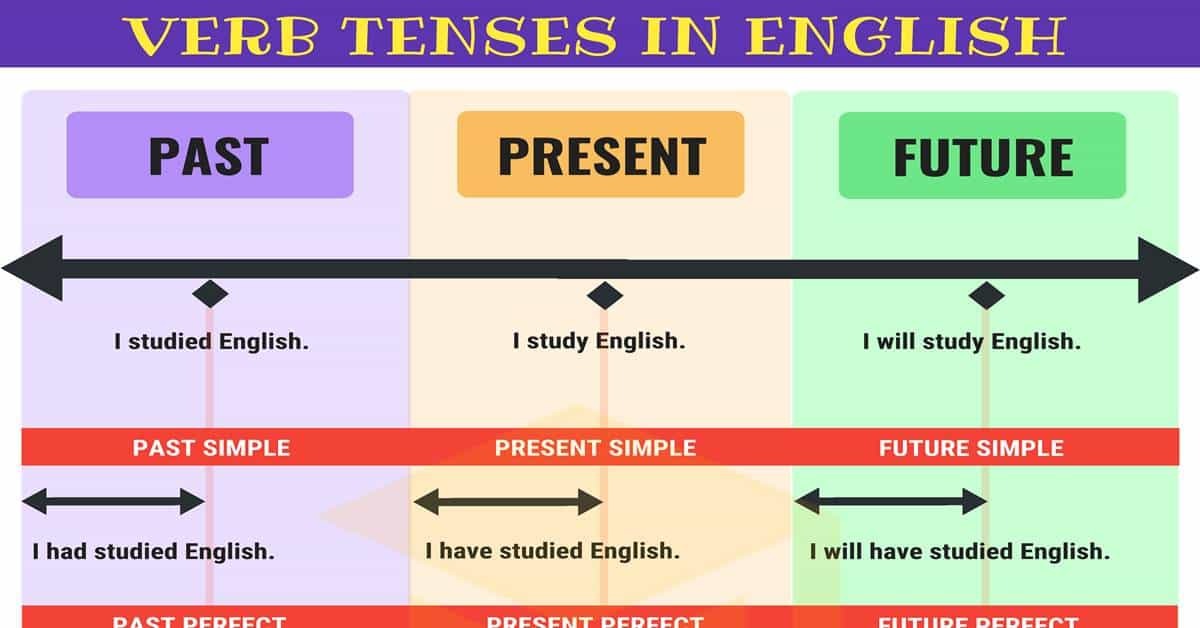
The past tense describes actions or states that occurred in the past. Understanding its various forms allows for precise communication of events, experiences, and completed actions. It’s crucial for narrating stories, discussing historical events, and expressing past habits or states.The past tense encompasses a range of forms, each with its own subtle nuances in meaning. These forms include the simple past, past continuous, past perfect, and past perfect continuous, each providing a different perspective on the past action.
We will now explore each form and its specific applications.
Forms of the Past Tense
The past tense is crucial for accurately describing actions and events that have already taken place. Different forms of the past tense provide a spectrum of details, enabling the speaker to express the duration, completion, or context of the past action.
- Simple Past: This form expresses a completed action that occurred at a specific point in the past. It’s often used to describe a single, completed action.
Example: I walked to the store yesterday. (This describes a single, completed action of walking.)
- Past Continuous: This form describes an action that was in progress at a specific point in the past. It often implies duration and ongoing activity.
Example: I was walking to the store when I saw my friend. (This describes an action in progress at a specific point in the past.)
- Past Perfect: This form describes an action that was completed before another action in the past. It emphasizes the order of events.
Example: I had finished my work before the meeting started. (This highlights the completion of work before the meeting.)
- Past Perfect Continuous: This form describes an action that was in progress before another action in the past. It emphasizes the duration of the ongoing activity before another past event.
Example: I had been studying for hours before the exam. (This indicates the duration of studying before the exam.)
Past Simple vs. Past Continuous
Understanding the difference between the past simple and past continuous is essential for conveying precise details about past actions.
| Feature | Past Simple | Past Continuous |
|---|---|---|
| Action | A completed action | An action in progress |
| Focus | The completion of the action | The duration or ongoing nature of the action |
| Time | A specific point in the past | A period of time within the past |
| Example | I ate lunch at noon. | I was eating lunch when the phone rang. |
| Situations | Describing a specific event or action | Describing an action in progress during a specific time |
The past simple is used when focusing on the completion of an action, while the past continuous highlights the duration or ongoing aspect of an action. The table clearly illustrates the distinctions.
Future Tense
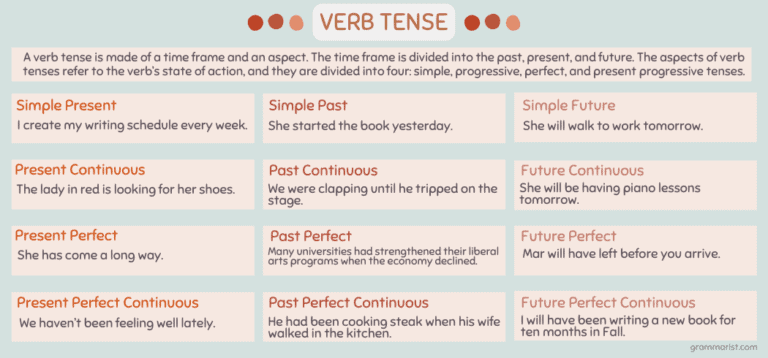
The future tense is crucial for expressing actions that will occur at a point in time after the present. It allows us to convey a range of future possibilities, from scheduled events to predictions about the future. Understanding the different forms of the future tense enables clearer and more precise communication about future actions and plans.Different forms of the future tense provide nuance in expressing the certainty or uncertainty surrounding future events.
For instance, using the simple future tense signifies a straightforward plan, while the future perfect continuous tense might indicate a future action that will have been in progress for a certain duration. Mastering these variations allows for a richer and more detailed description of future events.
Forms of the Future Tense
The future tense encompasses several forms, each with its specific application. These forms help to convey the different aspects of future time, from scheduled events to predictions.
- Simple Future: This form expresses a straightforward future action. It’s often used for predictions, plans, and scheduled events. The construction usually involves the auxiliary verb “will” or “shall” followed by the base form of the main verb. For example, “I will go to the store tomorrow.” or “They shall arrive by noon.”
- Future Continuous: This form describes an action that will be in progress at a specific time in the future. It uses the auxiliary verb “will” or “shall” plus the -ing form of the main verb. For example, “I will be studying at the library tomorrow evening.” or “She will be working on the project all day.”
- Future Perfect: This form indicates an action that will be completed before a specific time in the future. It uses the auxiliary verb “will” or “shall” plus the past participle of the main verb. For example, “By the end of the year, I will have finished my degree.” or “They will have left by midnight.”
- Future Perfect Continuous: This form describes an action that will have been in progress for a period of time before a specific time in the future. It combines the future perfect with the continuous aspect. For example, “By next week, she will have been working on this project for two months.” or “By the time he graduates, he will have been studying diligently for four years.”
Application of Future Tense Forms
The application of these forms depends on the specific nuance desired. Here are some examples:
- Simple Future: “The meeting will start at 10 AM.” (Predicting a future event)
- Future Continuous: “I will be playing tennis tomorrow afternoon.” (Describing an ongoing activity in the future)
- Future Perfect: “By next summer, I will have saved enough money for a trip.” (Indicating an action completed before a future point)
- Future Perfect Continuous: “By the time we arrive, they will have been waiting for us for hours.” (Describing an action in progress before a future point)
Simple Future vs. Future Continuous
This table highlights the key differences between the simple future and future continuous tenses.
| Feature | Simple Future | Future Continuous |
|---|---|---|
| Action | A single, completed action in the future | An action in progress at a specific time in the future |
| Focus | The occurrence of the action | The duration of the action |
| Example | “I will go to the park.” | “I will be walking in the park.” |
Alternative Ways to Express Future Actions
There are various ways to express future actions beyond the formal tenses, including using phrases like “going to” or future time expressions.
Using “going to” + base form of verb is used for predictions based on present evidence or intentions. “I’m going to study for the exam tonight.”
Future time expressions such as “tomorrow,” “next week,” “in the future,” “soon,” etc. also clarify the future time frame.
Verb Tense Usage in Different Contexts
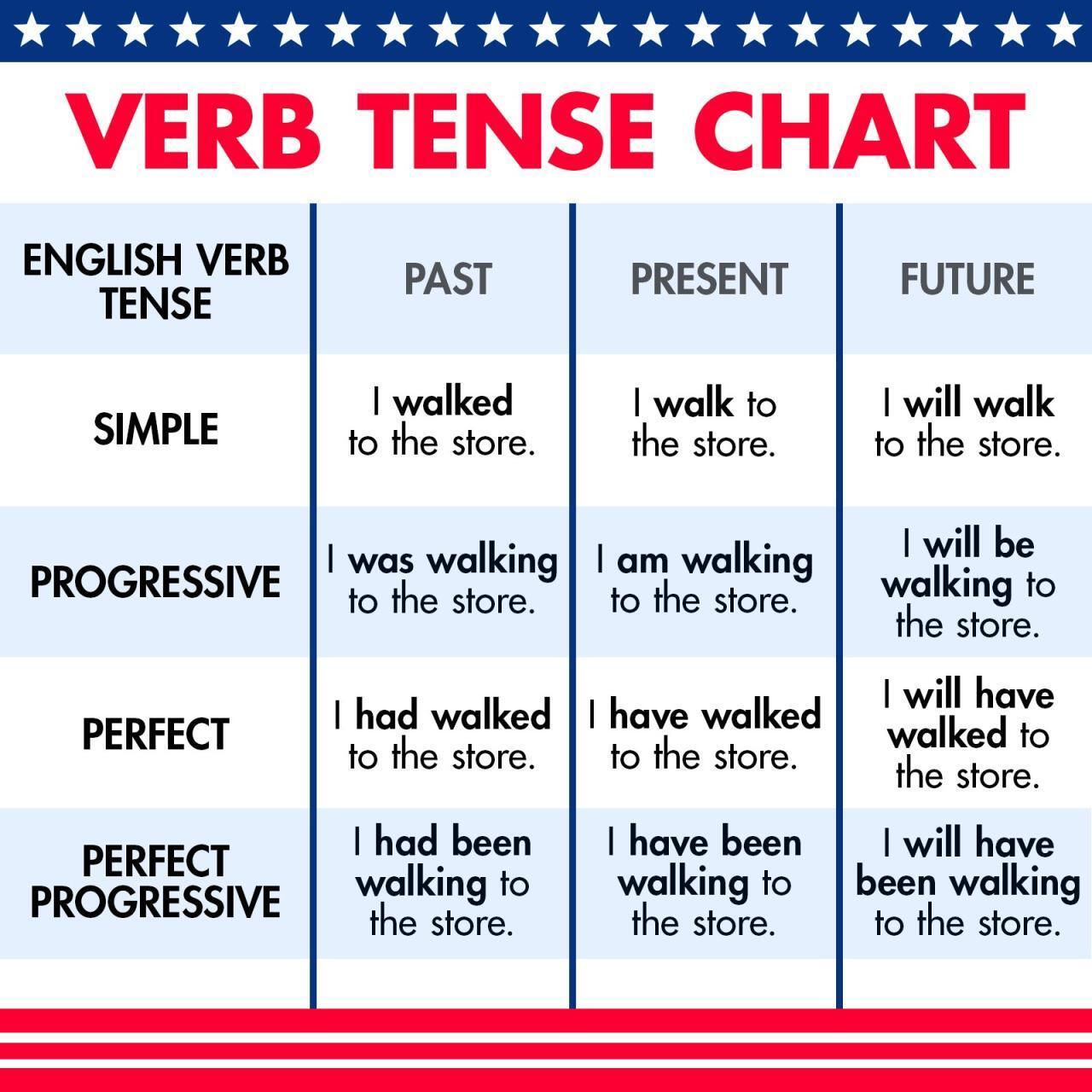
Understanding verb tenses is crucial for conveying precise meaning and effectively communicating in various contexts. Choosing the correct tense significantly impacts how your message is interpreted. This section delves into how verb tenses are employed in different writing styles and situations, highlighting the subtle yet important differences in meaning created by tense shifts.Different contexts demand different tenses. A narrative, for example, will often use past tense to describe events that have already occurred.
Conversely, a description of a current situation might use present tense. This careful selection of tense is vital to effectively convey the desired message and maintain the intended tone.
Narrative vs. Description
Narratives primarily focus on recounting events in a chronological order. Using past tense is essential for maintaining the narrative flow and establishing the sequence of actions. Descriptions, on the other hand, focus on conveying a sense of the present moment or a static scene. Present tense is typically used in descriptive writing to highlight the current state or characteristics of a subject.
- Example 1: Narrative – “The cat chased the mouse across the room.” (Past tense emphasizes the completed action.)
- Example 2: Description – “The sun sets over the mountains, painting the sky in hues of orange and gold.” (Present tense captures the ongoing scene.)
Formal vs. Informal Writing
Formal writing often employs more complex sentence structures and precise language, reflecting a need for clarity and accuracy. Past tense is frequently used to describe completed actions, while present tense can be employed to describe general truths or recurring events. Informal writing, in contrast, often prioritizes conversational tone and brevity. This may lead to more frequent use of present tense, even when describing past events, for a more casual and immediate feel.
- Example 1: Formal – “The study demonstrated a significant correlation between the two variables.” (Past tense, precise and factual.)
- Example 2: Informal – “I saw a really cool movie last night!” (Present tense used for a more casual and immediate tone.)
Impact of Tense on Meaning
The choice of verb tense directly influences the meaning of a sentence. Changing a tense can alter the implied time frame, the emphasis on the action, and even the speaker’s perspective. This nuanced effect underscores the importance of selecting the appropriate tense for the desired impact.
| Original Sentence | Changed Tense | Effect on Meaning |
|---|---|---|
| “He is writing a letter.” | “He wrote a letter.” | Changes the meaning from a present action to a past action, emphasizing completion. |
| “The sun rises every morning.” | “The sun rose this morning.” | Changes the general statement to a specific instance in the past. |
- Consider this example: “I eat pizza every Friday.” If changed to “I ate pizza every Friday,” the meaning shifts from a regular habit to a description of past events that no longer happen regularly.
Opinion vs. Fact
When expressing opinions, present tense is often used to convey the speaker’s current viewpoint. This is because the opinion is considered to hold true in the present. When stating facts, past tense is often employed to indicate that the event is already concluded, providing a more objective tone.
- Example 1: Opinion – “I believe that technology is improving our lives.” (Present tense expressing a personal belief.)
- Example 2: Fact – “The experiment proved that the hypothesis was correct.” (Past tense, expressing a proven conclusion.)
Irregular Verbs
English, like many languages, boasts a significant number of irregular verbs. These verbs deviate from the standard conjugation patterns, meaning their past tense and past participle forms are not predictable. Understanding these irregularities is crucial for accurate and fluent communication.
Common Irregular Verbs
A substantial portion of English’s most frequently used verbs are irregular. Mastering these verbs allows for more natural and precise expression.
List of Irregular Verbs
This table presents a selection of common irregular verbs, their past tense forms, and their past participle forms. Memorizing these forms will enhance your command of the English language.
| Verb | Past Tense | Past Participle |
|---|---|---|
| Be | was/were | been |
| Have | had | had |
| Do | did | done |
| Go | went | gone |
| See | saw | seen |
| Say | said | said |
| Eat | ate | eaten |
| Drink | drank | drunk |
| Take | took | taken |
| Bring | brought | brought |
| Think | thought | thought |
| Become | became | become |
| Feel | felt | felt |
| Keep | kept | kept |
| Write | wrote | written |
Examples of Irregular Verbs in Sentences
These examples illustrate the use of irregular verbs in context, showcasing how their different forms are used in various sentences.
- I was happy to see you. (Past tense of “be”)
- She has already eaten her lunch. (Present perfect tense, past participle of “eat”)
- We did not go to the store today. (Past tense of “do” and “go”)
- He said he would be there. (Past tense of “say” and “be”)
- They have been to Paris. (Present perfect tense, past participle of “be”)
- I thought about it for a while. (Past tense of “think”)
- They brought gifts for the party.
Common Mistakes and Solutions
Understanding verb tenses is crucial for effective communication. However, learners frequently encounter challenges in applying these tenses correctly. This section delves into common errors, their underlying causes, and practical solutions for avoiding them.Common errors often stem from a lack of understanding of the specific contexts where each tense is used. Furthermore, the intricacies of irregular verbs and subtle differences in tense usage can sometimes lead to confusion.
By identifying these patterns and practicing consistent application, learners can significantly improve their command of verb tenses.
Identifying Common Mistakes
Learners frequently struggle with distinguishing between the past, present, and future tenses. Misinterpreting the time frame of an action or event is a significant source of error. For instance, using the present tense to describe a past action can lead to confusion. Conversely, using the past tense for an action occurring in the present can also create misunderstandings.
Understanding the Root of Errors
A key reason for these mistakes is a lack of understanding of the nuances of each tense. Another contributing factor is the inconsistent application of tense rules, particularly when dealing with irregular verbs. For example, remembering the irregular past tense forms of verbs like “go” (went), “drink” (drank), and “eat” (ate) can be challenging for some learners. This often stems from a lack of focused practice and memorization.
Strategies to Avoid Mistakes
Developing a clear understanding of the context is paramount. Consider the time frame of the action or event being described. For instance, actions occurring at the moment of speaking are typically expressed using the present tense. Actions that have already happened are usually expressed in the past tense. Future actions, by contrast, are typically expressed using future tense.
Utilizing Context Clues
Context clues are essential for correctly identifying the appropriate verb tense. Pay close attention to the words and phrases surrounding the verb. For example, words like “yesterday,” “last week,” or “in the future” provide clear context clues that suggest the use of the past or future tense, respectively. Understanding the overall meaning of the sentence helps determine the correct tense.
Practice and Review
Consistent practice is essential. Regularly practicing with exercises and real-world examples reinforces understanding and application. Reviewing previously learned material, particularly irregular verbs, is also vital to solidifying comprehension.
Examples of Common Mistakes and Solutions
| Mistake | Explanation | Solution |
|---|---|---|
| Using the present tense to describe a past event. | This mistake arises from not distinguishing between the time frame of the action. | Focus on identifying the time frame of the event. If the event happened in the past, use the past tense. |
| Using the past tense for an action occurring in the present. | This arises from misinterpreting the time frame of the event. | Pay close attention to the words and phrases surrounding the verb. Words like “now,” “today,” or “at this moment” suggest the present tense. |
| Incorrect use of irregular verbs. | This is due to difficulty remembering the irregular forms of verbs. | Memorize the irregular past tense forms of verbs. Regularly review these forms. Practice using them in sentences. |
Practice Exercises and Activities
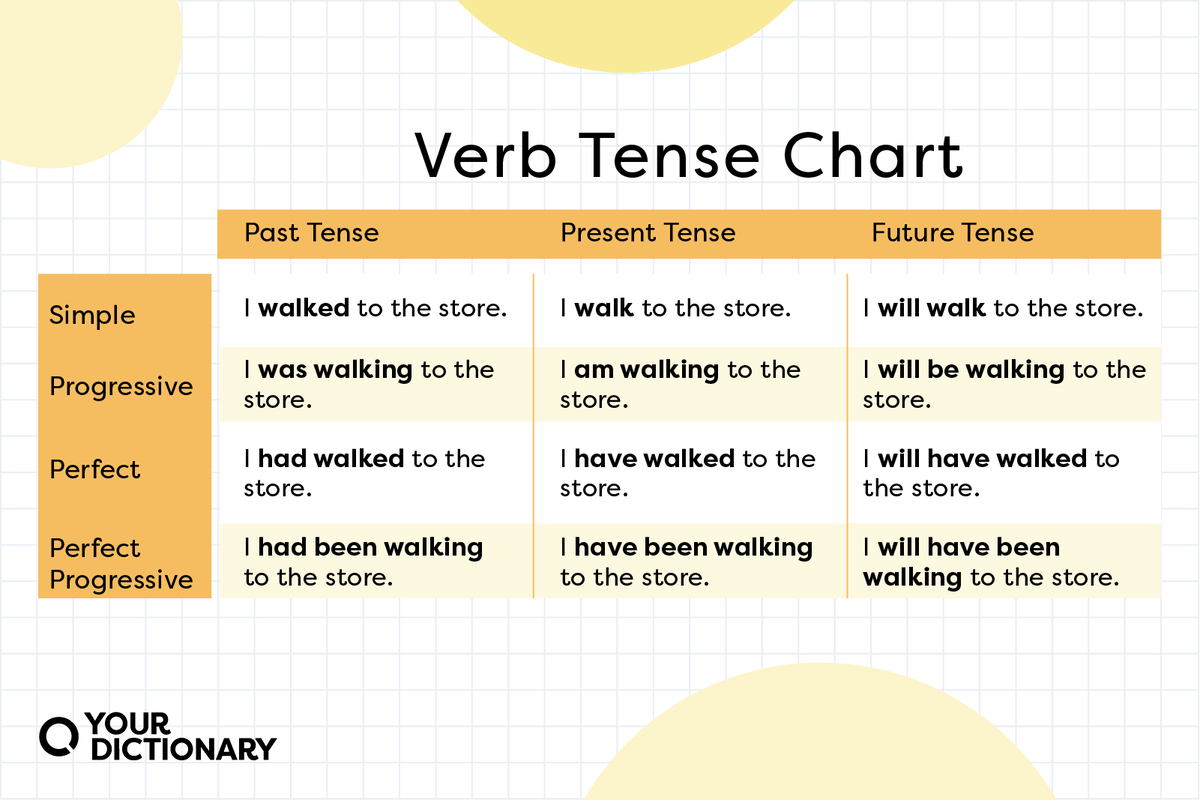
Reinforcing understanding of verb tenses requires practical application. These exercises are designed to solidify your grasp of the different tenses and their appropriate usage in various contexts. They will allow you to apply your knowledge and build confidence in your ability to employ these grammatical tools effectively.
Verb Tense Identification Exercises
These exercises focus on identifying the correct verb tense in a given sentence. This crucial skill underpins the ability to analyze and understand the time frame being described. Correct identification is fundamental to accurate communication.
- Instructions: Read each sentence and identify the verb tense used. Choose from present, past, future, present perfect, past perfect, or future perfect.
- Examples:
- Sentence 1: I am studying English. (Present)
- Sentence 2: She had finished her work by noon. (Past Perfect)
- Sentence 3: They will be traveling next week. (Future)
- Additional Practice: Provide a list of sentences and have students identify the verb tense.
Sentence Construction Exercises
These exercises encourage students to construct sentences using specific verb tenses, reinforcing the application of tense rules.
- Instructions: Construct sentences using the specified verb tense and the provided subject and verb.
- Examples:
- Subject: The dog; Verb: run; Tense: Past; Example Sentence: The dog ran quickly across the park.
- Subject: We; Verb: study; Tense: Present; Example Sentence: We are studying diligently for our exams.
- Subject: He; Verb: travel; Tense: Future; Example Sentence: He will travel to Europe next summer.
- Further Instructions: Offer a wider variety of subjects, verbs, and tense requirements to ensure comprehensive practice.
Contextual Application Exercises
These exercises focus on applying verb tenses in meaningful, context-driven scenarios.
- Instructions: Read a short paragraph or story and rewrite specific sentences using a different verb tense to change the meaning and impact of the text.
- Example:
Original sentence: “I go to the library every day.”
Rewrite using the present perfect tense: “I have gone to the library every day this week.”
Rewrite using the past tense: “I went to the library yesterday.”
- Further Instructions: These exercises help students understand how the choice of verb tense can significantly alter the meaning and nuance of a sentence.
Practice Methods and Techniques
Various methods and techniques enhance practice effectiveness.
- Active Learning: Encourage students to actively participate in exercises, rather than passively reading or listening.
- Collaborative Learning: Pair or group students to discuss and review exercises together.
- Regular Practice: Consistent, short practice sessions are more effective than infrequent, long ones.
Resources for Additional Practice
Numerous online and print resources offer supplementary practice.
- Online Exercises: Many websites provide interactive exercises focusing on verb tenses.
- Grammar Workbooks: Standard grammar workbooks often include comprehensive exercises.
- Language Learning Apps: Language learning apps can offer personalized practice and feedback.
Resources for Further Learning
Expanding your understanding of verb tenses requires exploring diverse resources. This section provides a curated list of valuable grammar resources, both online and in print, to aid your learning journey. These resources cater to various learning styles and experience levels, ensuring that you can find the perfect fit for your needs.This section will Artikel reputable grammar resources, categorizing them based on their content and target audience.
We will explore websites, books, and other learning materials, offering insights into their specific focus and target learners. Finally, we will provide guidance on selecting appropriate resources for further development, particularly for advanced learners.
Grammar Websites
Comprehensive grammar websites offer a wealth of information on verb tenses, often accompanied by interactive exercises and explanations. These resources allow for flexible learning and immediate feedback.
- Grammarly: This website and application provides comprehensive grammar checking and suggestions, which includes specific guidance on verb tense usage. It offers explanations and examples, making it helpful for identifying and correcting errors in your writing.
- Grammar Monster: This site offers a wealth of grammar lessons, explanations, and exercises. It covers various aspects of grammar, including verb tenses, in a clear and concise manner. It also provides practice exercises and examples for learners to reinforce their understanding.
- Merriam-Webster Dictionary: Beyond its dictionary function, Merriam-Webster provides extensive grammar explanations and examples. The explanations often incorporate real-world examples and are accompanied by usage notes, offering a nuanced understanding of verb tense application.
Grammar Books
Grammar books offer a structured approach to learning verb tenses, often providing comprehensive explanations and examples. They can be valuable resources for in-depth study and for learners who prefer a more traditional learning format.
- “Practical English Usage” by Michael Swan: This book is highly regarded for its comprehensive coverage of English grammar. It includes a substantial section on verb tenses, offering detailed explanations and numerous examples demonstrating how verb tenses are used in various contexts. It is ideal for learners seeking a comprehensive understanding of the nuances of verb tense usage.
- “Grammar for English Language Teachers” by Martin Hewings: This book offers a comprehensive and practical guide for English teachers. The content is highly relevant for students who are interested in deepening their knowledge of grammar, and it provides valuable insight into the pedagogical approach to teaching verb tenses.
Online Tools and Learning Platforms
Online learning platforms and tools offer interactive exercises and assessments, fostering active learning and providing instant feedback. These resources often cater to various learning styles.
- Khan Academy: This platform offers a range of grammar lessons, including those focusing on verb tenses. The lessons are accompanied by interactive exercises, enabling learners to practice and reinforce their understanding.
- Quizlet: This platform is particularly helpful for memorizing irregular verbs. Users can create flashcards and quizzes, tailoring the learning experience to individual needs.
Resources for Advanced Learners
For learners seeking to deepen their understanding of complex verb tense usage, advanced resources are available. These often focus on specific contexts, nuances, and advanced grammatical structures.
- Academic journals and articles on linguistics: Advanced learners can explore specialized academic resources to further their understanding of the theoretical aspects of verb tense usage. This can be helpful for learners interested in the linguistic structures and the historical development of verb tenses.
- Style guides for specific fields (e.g., academic writing): These guides often provide in-depth explanations of verb tense usage in specific contexts, like academic writing or technical reports. They offer guidance on maintaining consistency and precision in complex writing tasks.
Ending Remarks
In conclusion, this guide has presented a thorough overview of verb tenses, covering everything from basic explanations to advanced applications. By understanding the intricacies of each tense and their usage in different contexts, you’ll be well-equipped to communicate clearly and effectively in English. Remember the importance of practice and consistent application, and refer back to the provided resources for further development.
We hope this comprehensive guide has proven beneficial in your journey to mastering verb tenses.