Language is more than just words; it’s a window into the soul of a culture. This guide delves into the intricate relationship between language and culture, exploring how cultural nuances shape the way we communicate. From the subtle differences in nonverbal cues to the profound impact of historical events, we’ll uncover the rich tapestry woven into the fabric of language.
Understanding the cultural context behind a language is crucial for effective cross-cultural communication. By examining linguistic features, cultural codes, and social contexts, we can move beyond simple translation and truly grasp the meaning embedded within the words. This knowledge is vital for navigating the complexities of international interactions and fostering mutual understanding.
Understanding Cultural Nuances in Language

Language is not simply a tool for communication; it’s a reflection of a culture’s values, beliefs, and history. To truly understand a language, we must also grasp the cultural context in which it’s used. This involves recognizing how different cultures express similar concepts using diverse grammatical structures and vocabulary, how nonverbal cues interact with verbal language, and how cultural values shape communication styles.
Examining the evolution of language through historical events and societal changes provides further insight into the cultural nuances that shape linguistic expression.Understanding how cultures express similar concepts differently illuminates the richness and diversity of human communication. Different cultures prioritize different aspects of communication, leading to distinct linguistic patterns. For example, some cultures emphasize directness in communication, while others prioritize indirectness and politeness.
These differences stem from underlying cultural values and norms.
Cultural Expressions of Similar Concepts
Different cultures often employ distinct grammatical structures or vocabulary to express similar concepts. For example, Japanese frequently uses indirect language to avoid confrontation, while American English tends to be more direct. This difference stems from cultural values emphasizing harmony and avoiding conflict in Japanese culture versus a more assertive communication style in American culture. Similarly, the concept of “time” is expressed differently across cultures.
In some cultures, punctuality is paramount, while others place more emphasis on flexibility and relationships. This is reflected in the language used to describe time-related concepts. For instance, the Japanese language has nuanced ways of expressing time that differ from English’s more linear approach.
Nonverbal Communication and Cultural Context
Nonverbal communication plays a crucial role in interpreting meaning within cultural contexts. Body language, facial expressions, and even the use of personal space vary significantly across cultures. In some cultures, maintaining eye contact is considered respectful, while in others, it might be viewed as aggressive or impolite. Gesture language can also have dramatically different meanings across cultures.
For example, a gesture that conveys agreement in one culture might be interpreted as a sign of disrespect in another. Therefore, effective cross-cultural communication necessitates awareness of these nonverbal cues.
Politeness Strategies in Different Cultures
Politeness strategies vary considerably across cultures. These strategies are deeply rooted in cultural values and norms, often reflecting priorities like maintaining harmony, showing respect, and avoiding confrontation. The table below contrasts politeness strategies in the United States and Japan.
| Cultural Feature | United States | Japan |
|---|---|---|
| Directness | Generally direct and explicit. | Often indirect and implicit, prioritizing harmony and avoiding confrontation. |
| Face-saving | Individualistic; less emphasis on maintaining the face of others. | Collectivistic; strong emphasis on maintaining the face of others. |
| Formality | Generally less formal, particularly in casual settings. | Often formal, especially in interactions with superiors or strangers. |
| Apologies | Frequent apologies for minor transgressions. | Apologies might be infrequent, focusing more on preventing future errors. |
Influence of Cultural Values on Language Use
Cultural values, such as individualism versus collectivism, significantly influence language use. Individualistic cultures, like the United States, often prioritize self-expression and independence, leading to a language that emphasizes individual needs and achievements. Collectivist cultures, like Japan, prioritize group harmony and interdependence, which is reflected in a language that emphasizes group needs and social obligations. These differences in values translate into how people interact and communicate.
Impact of Historical Events and Societal Changes on Language
Historical events and societal changes significantly shape a language’s evolution within a culture. Wars, migrations, and technological advancements all contribute to linguistic shifts. For example, the influx of immigrants into the United States has led to the incorporation of various linguistic elements from different cultures into American English. Similarly, technological advancements have introduced new words and phrases into the lexicon, reflecting the changes in society.
The development of the internet, for instance, has introduced a unique form of communication and vocabulary, demonstrating how language evolves with societal changes.
Analyzing Linguistic Features Reflecting Culture
Linguistic features are not merely tools for communication; they are deeply intertwined with the cultural values and worldview of a society. Understanding these connections allows us to appreciate the richness and complexity of human expression across diverse cultures. Analyzing how different cultures express emotions, use metaphors, structure their language, and employ proverbs reveals insights into their unique perspectives and experiences.The structure of a language, including its grammatical rules and sentence structures, often reflects the cultural priorities and values of its speakers.
For example, languages that place a strong emphasis on hierarchical relationships may have more complex grammatical structures for denoting social status. Likewise, languages that prioritize directness in communication may have fewer nuanced ways of expressing politeness or indirectness.
Emotional Expression
Different cultures have distinct ways of expressing emotions. Some cultures prioritize restraint and emotional suppression, while others encourage open and expressive displays. These differences are reflected in the vocabulary used to describe emotions, the intensity of emotional expressions, and the contexts in which emotions are considered appropriate. For example, the English language uses a wide range of words to describe anger, from mild irritation to violent rage.
In contrast, some languages may have fewer distinct terms for anger, focusing instead on the underlying causes or consequences of the emotion. This difference in vocabulary reflects the cultural emphasis on managing and understanding the emotional landscape.
Metaphors and Similes
Metaphors and similes, figures of speech that compare dissimilar things, are powerful tools for conveying meaning and understanding. These figures of speech often draw on cultural experiences, beliefs, and values. For instance, a culture that highly values community might use metaphors that emphasize interconnectedness, while a culture that values individual achievement might use metaphors that highlight competition and personal growth.
The imagery employed in metaphors and similes often reflects the specific values and experiences of a culture.
Language Structure and Cultural Worldview
The structure of a language, including its grammar and syntax, often mirrors the cultural worldview of its speakers. For example, languages that prioritize action may have verb-focused sentence structures, while languages that emphasize relationships may have more elaborate noun phrases. The arrangement of words and grammatical features reflect the culture’s perception of the world and its place within it.
Proverbs and Idioms
Proverbs and idioms are concise expressions of cultural wisdom and common experience. These phrases often convey complex cultural values and beliefs in a succinct and memorable way. For example, the proverb “A bird in the hand is worth two in the bush” (English) reflects a cultural emphasis on prudence and caution, contrasting with proverbs from cultures that might value risk-taking or opportunity.
Comparative analysis of proverbs from various cultures can provide significant insight into differing values and perspectives.
Grammatical Structures and Cultural Values
Grammatical structures, such as the use of honorifics or the ordering of subject-verb-object, can reflect cultural values. For example, languages that use elaborate honorific systems may reflect a strong emphasis on social hierarchy and respect for elders or those in positions of authority. The structure of sentences, including the position of verbs, nouns, and adjectives, can reveal insights into the cultural worldview and how individuals are positioned within society.
Exploring Language and Social Context
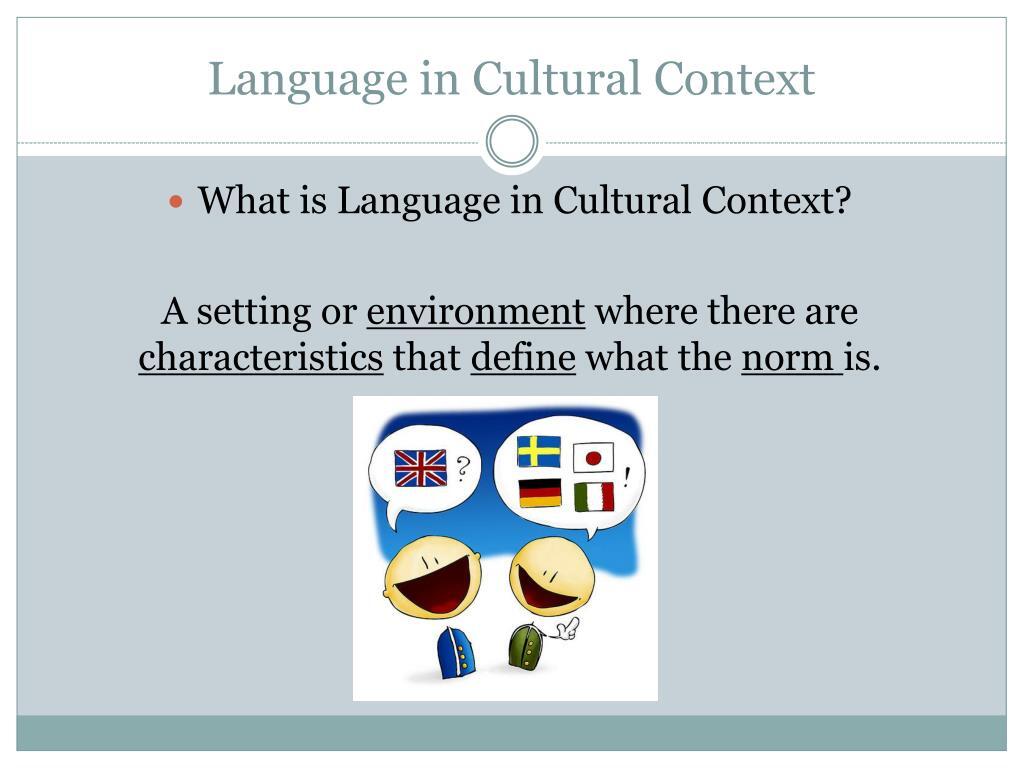
Language is intricately interwoven with the social fabric of a culture. Understanding how language use reflects power dynamics, social class, and educational backgrounds is crucial to comprehending the nuances of cultural communication. This section delves into how language acts as a tool for both maintaining and challenging social norms, and how its application varies across different social settings.
Power Dynamics Reflected in Language
Language frequently mirrors and reinforces power imbalances within a culture. Certain linguistic features, such as formal address terms or specific vocabulary, can signal status and hierarchical relationships. For instance, the use of titles like “Professor” or “Doctor” immediately conveys a level of authority and respect. Conversely, informal language or slang might be used to establish camaraderie among peers, or to diminish the perceived status of those in positions of power.
Social Class and Language Use
Social class significantly impacts language acquisition and usage. Individuals from different socioeconomic backgrounds may possess distinct vocabularies, grammatical structures, and conversational styles. Educational attainment also plays a critical role, influencing the complexity and sophistication of language employed. For example, individuals with higher levels of education often utilize more nuanced and abstract vocabulary, whereas those with less formal education might rely on more concrete and basic language.
Language and Social Norms
Language can be used to both uphold and challenge established social norms. For instance, the use of polite language in a formal setting reinforces expected conduct, while the use of slang or jargon can create an in-group identity. However, language can also be employed to subvert social norms, as seen in protest movements or the use of politically charged vocabulary to challenge prevailing attitudes.
This can be seen in various forms of art and media.
Language in Different Social Settings
Language use varies considerably across different social contexts. Within the family, language tends to be more informal and personalized, with members often employing nicknames or familiar terms of address. In the workplace, professional and formal language is typically employed, with specific jargon and vocabulary used to convey information efficiently. Public settings, such as markets or temples, exhibit distinct linguistic characteristics reflecting the specific activities and cultural values associated with each environment.
Language in Public Spaces
| Public Space | Language Characteristics | Cultural Values Reflected |
|---|---|---|
| Market | Bargaining, direct negotiation, use of local slang, possibly louder tone. | Negotiation, pragmatism, community interaction, valuing of personal interaction. |
| Temple | Formal language, respectful tone, adherence to specific rituals or traditions in communication, reverence, possibly using religious language. | Respect for religious beliefs, tradition, spirituality, adherence to rituals. |
| Public Transportation | A mix of formality and informality, depending on the context and culture. May be influenced by noise levels and interaction with others. | Balance between formality and informality, consideration of others, efficiency, tolerance of differing communication styles. |
| Educational Institutions | Formal language, structured communication, adherence to specific academic vocabulary. | Knowledge transmission, logic, intellectual discourse, respect for authority. |
Interpreting Language Through Cultural Lenses

Understanding a language goes beyond its grammatical structure; it deeply intertwines with the cultural context in which it is used. Different cultures have unique perspectives, values, and social norms that shape how people perceive and interpret the same words or phrases. This nuanced understanding is crucial for effective communication and avoiding misunderstandings in cross-cultural interactions.Cultural perspectives profoundly influence the interpretation of words and phrases.
The same word can evoke vastly different emotions or connotations depending on the cultural background of the speaker and listener. For instance, a direct and assertive communication style valued in some cultures might be perceived as rude or impolite in others. Therefore, recognizing and considering the cultural context is essential for accurate interpretation.
Cultural Shaping of Word and Phrase Interpretation
Different cultures assign various meanings to seemingly simple words or phrases. Consider the word “yes.” In some cultures, a hesitant or indirect response might still be interpreted as “yes.” In contrast, in other cultures, a direct and immediate “yes” is expected. These variations demonstrate how cultural nuances significantly impact the interpretation of linguistic expressions. Furthermore, idioms and proverbs, deeply rooted in cultural values and beliefs, often carry meanings that are not immediately apparent to those unfamiliar with the culture.
Cultural Influences on Politeness and Rudeness
Cultural norms dictate the acceptable levels of politeness and rudeness in language. Directness, for example, is valued in some cultures, where straightforward communication is seen as efficient and respectful. In other cultures, indirectness and tact are highly valued, and directness can be perceived as rude or impolite. The use of honorifics, titles, and formal language also varies significantly across cultures.
These factors significantly impact how speakers and listeners perceive politeness and rudeness. This is crucial in business negotiations, social interactions, and diplomatic discourse.
Persuasion and Negotiation Across Cultures
The strategies employed for persuasion and negotiation vary considerably across cultures. Some cultures favor a collaborative and consensus-building approach, emphasizing shared goals and mutual respect. Others may rely on more assertive and competitive strategies, prioritizing individual gains and direct confrontation. Understanding these differing approaches is crucial for successful negotiations and effective communication in international business and diplomacy.
Cultural Values in Storytelling and Narrative Structure
Cultural values heavily influence storytelling and narrative structure. Some cultures prioritize linear narratives with clear beginnings, middles, and ends. Others may value cyclical narratives that emphasize interconnectedness and recurring themes. The use of metaphors, symbolism, and other literary devices also varies significantly, reflecting the distinct cultural perspectives of the storytellers.
Examples of Cultural Misinterpretations
Misinterpretations of language frequently occur due to cultural differences. For example, a direct question posed in a culture that values indirect communication might be perceived as aggressive or rude. Similarly, a gesture or expression common in one culture might have an entirely different meaning or connotation in another. This demonstrates the importance of recognizing the cultural context of communication to avoid misunderstandings.
Consider the “thumbs up” gesture, which signifies approval in many Western cultures, but can be offensive or even insulting in certain parts of the Middle East.
Developing Cross-Cultural Communication Skills
Cultivating effective cross-cultural communication is crucial in today’s interconnected world. Understanding and appreciating diverse cultural perspectives is paramount to fostering successful interactions and building strong relationships across borders and communities. This requires a conscious effort to move beyond simple linguistic understanding and delve into the nuances of cultural context.Successful cross-cultural communication hinges on more than just fluency in a language.
It necessitates an awareness of how cultural values, beliefs, and norms shape communication styles and interpretations. This awareness allows for more empathetic and respectful interactions, leading to greater mutual understanding and cooperation.
Importance of Cultural Context in Communication
Considering cultural context in communication is essential for avoiding misunderstandings and misinterpretations. Cultural differences significantly impact how individuals perceive and respond to verbal and nonverbal cues. For example, direct communication styles valued in some cultures might be perceived as rude or aggressive in others, while indirect communication styles favored in other cultures may be seen as evasive or unclear.
Recognizing these diverse communication styles is critical to building trust and rapport.
Strategies for Effective Cross-Cultural Communication
Effective cross-cultural communication demands a proactive approach, involving a range of strategies.
| Strategy | Description |
|---|---|
| Active Listening | Paying close attention to both verbal and nonverbal cues, demonstrating empathy and understanding of the speaker’s perspective. Reflecting back what you’ve heard to ensure accurate comprehension. |
| Cultural Sensitivity Training | Engaging in formal or informal training to enhance awareness of diverse cultural norms, values, and communication styles. This involves learning about different customs and traditions. |
| Nonverbal Communication Awareness | Recognizing and interpreting nonverbal cues such as body language, facial expressions, and personal space. Understanding how these cues vary across cultures. |
| Clear and Concise Language | Using simple, straightforward language avoiding jargon or slang. Being mindful of potential cultural differences in the meaning of words. |
| Seeking Clarification | Asking for clarification when necessary, demonstrating respect for the other person’s perspective. Avoiding assumptions or jumping to conclusions. |
Avoiding Common Communication Pitfalls
Cultural misunderstandings often arise from assumptions and biases. It’s vital to avoid making generalizations about an entire culture based on individual experiences. Generalizations can lead to misinterpretations of behaviors and intentions. For example, in some cultures, maintaining eye contact is a sign of respect and attentiveness, while in others, it might be considered disrespectful or confrontational.
Adapting Language Use to Different Cultural Norms
Adapting language use to suit different cultural norms is crucial for effective communication. This includes being mindful of formality levels, tone, and humor. For instance, some cultures favor formal language in professional settings, while others may be more comfortable with informal language. Understanding and respecting these differences can significantly enhance communication. Using respectful and appropriate language for different situations and audience members is paramount.
Respectful Questioning to Learn Cultural Nuances
Asking respectful questions about cultural nuances is a powerful way to foster understanding. Open-ended questions encourage discussion and promote a deeper understanding of different perspectives. Instead of asking “Why do you do it that way?”, a more effective approach is to ask “How does your culture influence your communication style?” This type of questioning acknowledges the cultural roots of communication styles, and shows genuine interest and respect for the individual’s perspective.
It’s also important to avoid asking questions that could be perceived as judgmental or intrusive.
Final Wrap-Up
In conclusion, understanding the cultural context behind a language is not merely an academic exercise; it’s a vital skill for anyone interacting with people from different backgrounds. By recognizing the diverse ways cultures express themselves through language, we can bridge communication gaps and build stronger, more meaningful connections across the globe. This exploration underscores the profound interconnectedness of language and culture, illuminating the richness and complexity of human interaction.