Unlock the power of spaced repetition to dramatically improve your vocabulary acquisition. This method, far more effective than rote memorization, leverages the science of how we learn to solidify your knowledge. By strategically reviewing words at increasing intervals, you’ll build a robust and lasting vocabulary that serves you in all aspects of your life.
This comprehensive guide explores the principles of spaced repetition, outlining how to select, input, and organize vocabulary, optimize retention, and address potential challenges. From basic implementation to advanced strategies, we’ll provide a roadmap for creating a personalized learning plan that aligns with your unique needs and goals.
Understanding Spaced Repetition
Spaced repetition is a powerful learning technique that leverages the psychological principles of memory consolidation. It’s fundamentally different from traditional rote memorization, offering a more effective and lasting approach to acquiring and retaining new information. This method prioritizes reviewing material at strategically increasing intervals, optimizing the memory process for maximum recall.The core principle of spaced repetition lies in revisiting learned material at progressively longer intervals.
This technique allows the brain to strengthen memory traces by reinforcing connections between concepts and ideas. Instead of cramming information and then immediately forgetting it, spaced repetition encourages the brain to actively recall information over time, strengthening neural pathways and making the knowledge more accessible in the long run.
The Spaced Repetition Principle
The spaced repetition principle hinges on the idea that memory retention is enhanced by revisiting material at increasing intervals. This approach contrasts sharply with traditional rote memorization, which often leads to rapid forgetting. The key difference is that spaced repetition actively engages the brain in retrieving information over time, rather than simply passively storing it. This active retrieval strengthens the memory trace, making the knowledge more resilient and easier to recall later.
The longer the interval between reviews, the more significant the strengthening effect.
How Spaced Repetition Differs from Traditional Memorization
Traditional rote memorization typically involves a single, intensive review of material followed by little or no subsequent engagement. In contrast, spaced repetition actively encourages the brain to recall information repeatedly, gradually increasing the intervals between reviews. This process allows for the formation of robust memory traces and reduces the likelihood of forgetting. This is particularly effective for vocabulary acquisition, where the aim is not only to memorize words but to also understand their usage and contextual application.
Psychological Basis of Spaced Repetition
The effectiveness of spaced repetition stems from the principles of memory consolidation. When we revisit information, we strengthen the neural pathways associated with that knowledge. Repeated retrieval, especially at increasing intervals, leads to a more robust and durable memory trace. This process allows for long-term retention and improves recall ability. This is consistent with the principles of long-term potentiation (LTP), a biological process where repeated stimulation of synapses strengthens their connections.
Comparison of Learning Methods
| Learning Method | Description | Strengths | Weaknesses |
|---|---|---|---|
| Spaced Repetition | Material is reviewed at increasing intervals. | Stronger long-term retention, promotes active recall. | Requires initial investment in scheduling reviews. |
| Flashcards | Use of cards to present and review information. | Portable and easily adaptable. | Can be tedious if not used with a system. |
| Active Recall | Actively retrieving information without cues. | Forces the brain to retrieve information, strengthening memory. | Can be challenging if the information is not well-understood. |
This table highlights the core differences between spaced repetition, flashcards, and active recall. Each method offers a unique approach to learning, and the best approach often depends on the individual learner’s preferences and learning style. Choosing the appropriate method is crucial for optimal learning outcomes.
Implementing Spaced Repetition for Vocabulary
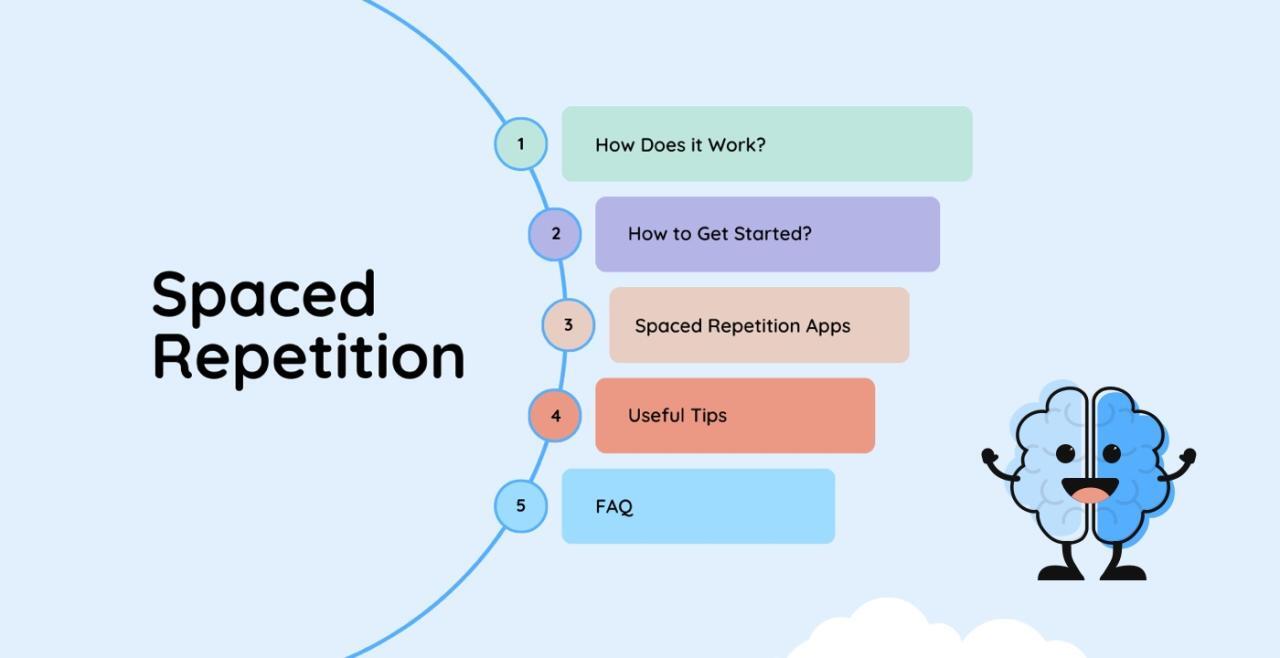
Effective vocabulary acquisition hinges on consistent review and spaced repetition. This approach leverages the power of memory consolidation, allowing learners to retain new words more effectively over time. This section explores various software and applications for vocabulary learning using spaced repetition, providing a practical guide for successful implementation.Implementing a spaced repetition system (SRS) for vocabulary learning can significantly enhance retention and recall.
The core principle of SRS is to revisit material at increasing intervals, aligning with the natural forgetting curve. This method optimizes study time and maximizes learning outcomes.
Software and Applications for Vocabulary Learning
Numerous software and mobile applications utilize spaced repetition algorithms to facilitate vocabulary acquisition. These tools often provide features such as customizable review schedules, flashcards, and progress tracking. Choosing the right application depends on individual learning preferences and available resources.
Comparison of Spaced Repetition Systems
Different SRS programs offer various features. Some programs provide a wider range of customization options, allowing users to adjust review intervals and difficulty levels. Others focus on user-friendliness and intuitive interfaces. Understanding the strengths and weaknesses of each system is crucial for selecting the most suitable one for individual needs.
Step-by-Step Guide to Using an SRS for Vocabulary Acquisition
A structured approach to utilizing SRS for vocabulary acquisition yields optimal results. Following these steps can streamline the learning process and maximize vocabulary retention.
- Choose a suitable spaced repetition system. Consider factors such as ease of use, customization options, and features that align with your learning style. Research and compare different options before making a decision.
- Import or create a vocabulary list. Compile a list of words you wish to learn, prioritizing those that are relevant to your goals or current context. Many SRS programs allow for importing existing word lists or the creation of new ones.
- Input the vocabulary into the SRS program. Carefully enter the words, including their definitions, pronunciations (if available), and example sentences. Accurate data input is crucial for the effectiveness of the SRS system.
- Adjust the review intervals based on your performance. Regularly review your performance and adjust the review intervals according to your understanding and recall. This adaptability is essential for optimizing the SRS system’s effectiveness.
- Consistency is key. Regular use of the SRS program is critical for vocabulary acquisition. Establish a consistent study schedule and stick to it as much as possible.
Importance of Adjusting Review Intervals
Regular review and interval adjustment are vital components of successful vocabulary acquisition using spaced repetition. Adjusting review intervals based on performance allows the system to adapt to the learner’s specific needs, optimizing the learning process. This adaptability ensures that the system focuses on words requiring more review while reducing the frequency of review for words already mastered.
Pros and Cons of Different Spaced Repetition Software Options
A comparative analysis of different SRS software helps in making informed choices. The following table Artikels some common spaced repetition software options, along with their advantages and disadvantages.
| Software | Pros | Cons |
|---|---|---|
| Anki | Highly customizable, extensive features, large community support, effective for long-term retention. | Steeper learning curve, potentially overwhelming for beginners. |
| Quizlet | User-friendly interface, various learning modes (not solely SRS), good for visual learners. | Fewer advanced customization options, less emphasis on long-term memory strategies. |
| Memrise | Interactive learning approach, gamified learning, good for beginners, incorporates audio. | Limited customization options compared to Anki, might not be ideal for intensive vocabulary acquisition. |
Effective Vocabulary Selection and Input

Choosing the right vocabulary words and efficiently inputting them into a spaced repetition system are crucial for effective learning. A well-structured approach ensures that your efforts are focused on the most impactful words, leading to faster and more durable vocabulary acquisition. This section Artikels key strategies for optimizing this process.Selecting the appropriate vocabulary is not just about random word lists; it’s about identifying words that are relevant to your learning goals and applicable in various contexts.
Proper input methods, combined with strategic categorization and understanding context, significantly enhance the learning experience. This section delves into the specific techniques to facilitate effective vocabulary acquisition.
Vocabulary Selection Strategies
A well-defined vocabulary selection process is vital. The selection should align with your specific learning needs, be it academic, professional, or personal. Consider these factors when choosing words:
- Frequency of Use: Prioritize words appearing frequently in your target texts, conversations, or materials. High-frequency words are more likely to be encountered and utilized in practice, leading to quicker recall and application.
- Relevance to Goals: Focus on vocabulary pertinent to your goals. If you’re learning for academic purposes, select words relevant to your chosen field. If it’s for travel, select words related to daily interactions.
- Learning Context: Choose words you encounter in authentic contexts, such as articles, stories, or conversations. This immersion approach helps associate the words with real-life situations.
- Personal Needs: Include words that you struggle to understand or use in your target language. Addressing specific vocabulary gaps ensures targeted learning and avoids redundancy.
Efficient Vocabulary Input Methods
Efficient input into a spaced repetition system is essential for maximizing learning outcomes. The correct method ensures that the words are encoded for effective recall and retrieval. This involves more than simply typing the word.
- Detailed Definitions: Provide comprehensive definitions, going beyond simple translations. Include nuances, usage examples, and synonyms to build a complete understanding.
- Contextual Examples: Include sentences showcasing the word’s usage in various contexts. This provides a richer understanding of the word’s role and application in different scenarios.
- Etymology and Origin: Incorporating the word’s origin and etymology enhances understanding and provides a deeper insight into the language.
- Image or Audio Associations: If possible, include relevant images or audio recordings to enhance memorization. Visual and auditory cues can significantly improve recall.
Categorization for Better Recall
Organizing vocabulary into meaningful categories enhances recall and reduces the feeling of overwhelming information. Categorization is a powerful tool to improve recall.
- Thematic Categorization: Group words based on themes or topics. For instance, words related to food, family, or technology can be grouped together.
- Semantic Categorization: Organize words based on their semantic relationships. This could involve synonyms, antonyms, or words related by function.
- Frequency-Based Categorization: Group words according to how often they appear in the learning materials. This helps prioritize high-frequency words for initial focus.
The Importance of Context
Learning vocabulary in context is critical for effective acquisition. Contextual understanding allows you to grasp the subtleties and nuances of a word’s meaning. Without context, a word might appear isolated and meaningless.
Learning vocabulary in context is essential for effective acquisition.
Learning in context strengthens understanding and application. This is exemplified by understanding how a word’s meaning might shift depending on the surrounding sentences.
Flowchart of Vocabulary Selection and Input
The following flowchart illustrates the process of selecting and inputting vocabulary words:[Flowchart image description: A flowchart depicting a structured process, starting with identifying learning goals and materials. It branches into selecting words based on frequency, relevance, and context. Each selected word is then inputted with detailed definitions, examples, and categorized. The flowchart continues to the review and repetition phase within the spaced repetition system.]
Optimizing Spaced Repetition for Retention

Spaced repetition, while a powerful tool, requires active engagement to maximize its effectiveness. Simply reviewing flashcards passively won’t lead to lasting vocabulary acquisition. A crucial aspect of optimizing this method involves integrating active recall and tailoring review schedules to individual learning styles. Furthermore, incorporating new vocabulary into natural contexts, such as conversations and writing, significantly strengthens long-term retention.Active recall, the process of retrieving information from memory without looking at the source, is fundamental to vocabulary mastery.
It forces the brain to work harder, strengthening neural pathways associated with the new words. This active engagement leads to more robust memory traces compared to passive review.
Active Recall Strategies for Vocabulary
Active recall involves retrieving the definition or meaning of a word from memory without looking at the source. Regularly testing yourself on vocabulary words through various methods enhances memory consolidation and improves long-term retention. These strategies include self-testing quizzes, flashcards with prompts, and creating sentences using the new words.
- Flashcards with prompts: Instead of simply flipping a card to reveal the definition, write a prompt on one side, such as “Give a synonym for this word” or “Describe this word in a sentence.” This encourages active recall and deeper understanding.
- Self-testing quizzes: Create short quizzes focusing on vocabulary words. Use different question formats, such as multiple choice, matching, or fill-in-the-blank. This helps you identify areas needing further attention.
- Sentence creation: Construct sentences using the new vocabulary words. This strengthens your understanding of the word’s context and usage. This activity forces you to think critically about the word’s meaning and how it fits into a sentence.
Adjusting Review Schedules Based on Learning Styles
Individual learning styles vary, and review schedules should be adjusted accordingly. Some learners may benefit from more frequent reviews initially, while others may prefer longer intervals between reviews. Flexibility and adaptability are key to optimizing the spaced repetition system for personal needs.
- Frequency adjustment: Start with more frequent reviews for new vocabulary, gradually increasing the time between reviews as mastery increases. For example, review new words daily, then every other day, and then weekly.
- Interval adjustment: Observe how you perform on reviews. If you struggle with a particular word, shorten the intervals between reviews. If you consistently recall the word easily, increase the time between reviews.
- Adaptive spaced repetition software: Many software programs employ algorithms that adjust the review schedule based on your performance. These tools can be highly effective in optimizing your learning process.
Incorporating Vocabulary into Daily Life
Integrating new vocabulary into everyday conversations and writing is essential for long-term retention. This practice provides context and reinforces the words’ meaning and usage.
- Conversational practice: Seek opportunities to use the new words in conversations with friends, family, or colleagues. This can be as simple as describing something using the new word, or explaining its meaning in your own words.
- Writing practice: Incorporate the words into your writing – journaling, emails, essays, or even creative writing. The more you use the words, the more familiar they become.
- Reading with a focus: Read texts containing the new words. Actively try to identify and understand how the words are used in context. This strengthens your understanding of the vocabulary.
Reinforcing Vocabulary in Different Contexts
Using vocabulary in different contexts helps consolidate learning. Here are several activities to reinforce learning in diverse settings.
- Vocabulary games: Play vocabulary-based games, such as crossword puzzles, word searches, or vocabulary-building apps, to engage with the words in a fun way.
- Creating vocabulary lists: Organize the words into thematic lists, such as “science terms,” “business jargon,” or “literary devices.” This can be a useful tool for future reference and review.
- Using vocabulary in different subjects: Attempt to apply the new words to other subjects you are studying, such as history, geography, or mathematics. This demonstrates the versatility of the words and how they apply in varied contexts.
Addressing Challenges and Limitations
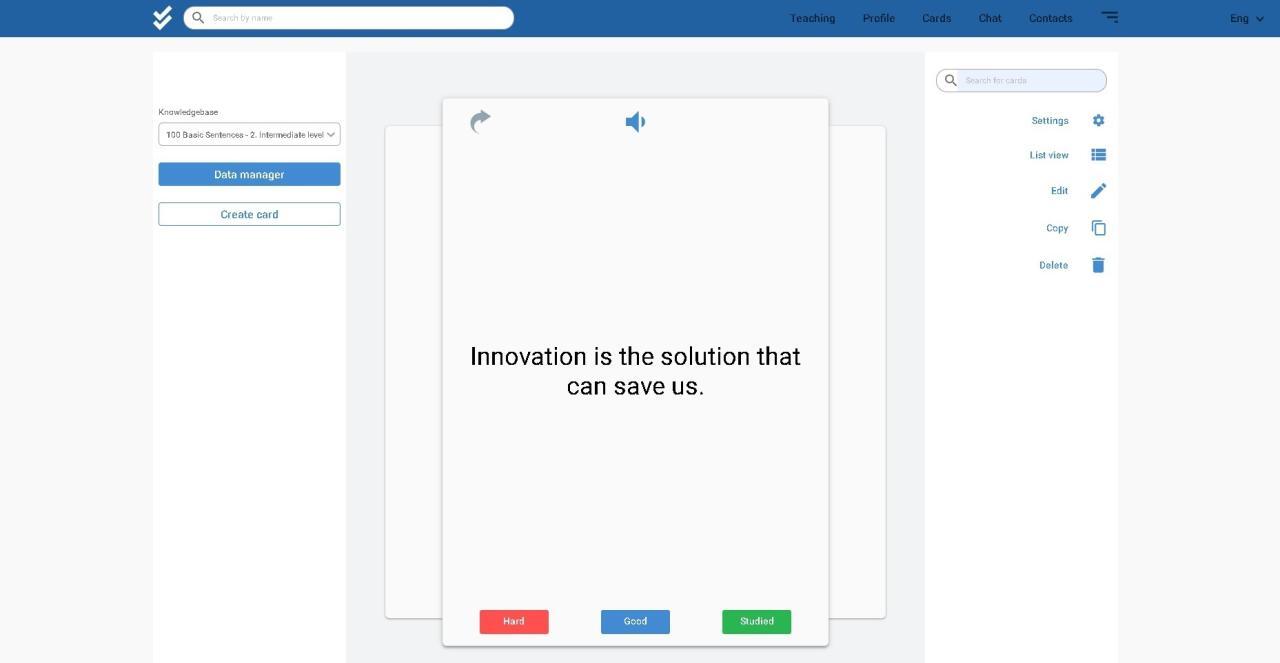
Spaced repetition systems, while highly effective, can present challenges for learners. Understanding these hurdles and developing strategies to overcome them is crucial for maximizing the benefits of this technique. This section delves into common obstacles and offers practical solutions for navigating them, ensuring a smoother and more successful vocabulary acquisition journey.Implementing spaced repetition successfully requires a proactive approach.
Simply downloading a software program isn’t enough; learners must actively engage with the system and adapt it to their individual needs. The key lies in understanding both the potential pitfalls and how to effectively address them.
Potential Challenges
Effective vocabulary acquisition through spaced repetition often faces obstacles. These challenges can stem from various factors, including motivational fluctuations, difficulties maintaining consistency, and the system’s limitations for certain types of vocabulary.
- Motivation and Consistency: Sustaining motivation throughout the learning process is paramount. The initial enthusiasm can wane as the learning progresses, leading to missed sessions and reduced effectiveness. Consistent use of the system is vital for optimal results. Strategies for maintaining motivation include setting realistic goals, celebrating milestones, and incorporating the learning into daily routines.
- Learning Style Mismatch: While spaced repetition is generally effective, individual learning styles might not perfectly align with the system’s approach. For instance, some learners might find rote memorization less engaging than active recall. Adapting the learning method to align with personal preferences is crucial for success.
- System Limitations for Specific Vocabulary Types: Spaced repetition systems are particularly effective for concrete, factual vocabulary, but less effective for abstract concepts or idioms. For example, the system might struggle to grasp the nuances of figurative language or cultural contexts. A crucial approach is supplementing the system with other learning methods like reading and discussion for complex or nuanced vocabulary.
Overcoming Challenges
Addressing the challenges of spaced repetition requires a multi-faceted approach. Combining strategies to bolster motivation, maintain consistency, and adapt the system to individual learning needs is essential.
- Building Motivation: Establish clear learning goals and reward systems to maintain enthusiasm. Tracking progress and recognizing achievements can significantly enhance motivation. Visualizing success can also be beneficial, for example, imagining oneself using the new vocabulary in a real-life conversation.
- Cultivating Consistency: Integrate spaced repetition into daily routines. Schedule dedicated time slots and make the learning sessions as consistent as possible. Consider using reminders and notifications to ensure adherence to the schedule. If possible, share the learning goals with a study partner or friend to foster accountability.
- Adapting to Different Vocabulary Types: Combine spaced repetition with other learning methods, like contextual learning. For example, read articles or stories using the new vocabulary. Use flashcards with visual aids for better retention. Supplement the spaced repetition system with active recall and other vocabulary building exercises.
Adapting Spaced Repetition for Different Learning Goals
Different learning objectives may necessitate adjustments to the spaced repetition system. A student aiming for fluency might need a different approach compared to a student focusing on specific vocabulary for an exam.
- Exam Preparation: Focus on high-frequency words and prioritize vocabulary related to the exam syllabus. Use the system to review frequently encountered terms. Incorporate practice questions and quizzes to reinforce understanding and application.
- General Vocabulary Building: Prioritize a wider range of vocabulary, including less common words. Integrate vocabulary into various learning activities, like reading and writing, to ensure the words are used in context. Consider the words’ usage frequency and context to maximize retention.
Tips for Staying Motivated and Consistent
Maintaining motivation and consistency is vital for effective spaced repetition. Here are several tips to help you stay on track.
- Set Realistic Goals: Start with manageable goals and gradually increase the vocabulary load. This approach avoids feeling overwhelmed and fosters a sense of accomplishment.
- Celebrate Milestones: Acknowledge and reward yourself for achieving progress. Small victories contribute significantly to motivation.
- Integrate Learning into Daily Life: Incorporate the vocabulary into everyday conversations, writing exercises, or reading material to reinforce learning.
- Seek Support: Connect with other learners or language partners for mutual support and motivation.
Advanced Spaced Repetition Strategies
Spaced repetition, while effective for basic vocabulary acquisition, can be further enhanced with advanced techniques. These strategies allow learners to optimize their learning process, adapt to individual needs, and effectively manage multiple vocabulary sets. Understanding these advanced approaches will lead to a more efficient and enjoyable learning experience.Advanced techniques for optimizing vocabulary acquisition often involve incorporating active recall, employing various learning styles, and utilizing multiple spaced repetition systems concurrently.
By understanding the nuances of these methods, learners can fine-tune their approach to achieve better results and maximize the benefits of spaced repetition.
Optimizing Vocabulary Acquisition with Active Recall
Active recall, a key component of effective learning, involves retrieving information from memory without external cues. This technique strengthens memory encoding and improves long-term retention. Incorporating active recall into spaced repetition systems enhances the effectiveness of review sessions. For example, instead of passively reviewing a vocabulary item, actively try to recall its definition or pronunciation before looking at the answer.
This active engagement significantly improves knowledge retention.
Utilizing Diverse Learning Styles
Individual learning styles vary. Some learners benefit from visual aids, others from auditory input, and some from kinesthetic activities. Adapting spaced repetition to suit diverse learning styles can greatly enhance comprehension and retention. Visual learners might benefit from flashcards with images, while auditory learners might find listening to vocabulary words and their definitions helpful. This tailored approach can lead to a more engaging and effective learning experience.
Managing Multiple Spaced Repetition Systems
Learning multiple vocabulary sets simultaneously requires careful management of spaced repetition systems. Different software and applications offer varying degrees of flexibility in managing multiple datasets. Using dedicated software designed for managing multiple spaced repetition systems is crucial for maintaining an organized approach. This will help learners effectively monitor their progress across different vocabulary sets.
Comparing and Contrasting Spaced Repetition Systems
Different spaced repetition software and apps offer varying features. Some platforms focus primarily on vocabulary, while others cater to a broader range of subjects. Understanding the strengths and weaknesses of different systems will enable learners to select the best tool to suit their needs. Comparison of features, such as the ability to import data, customize review schedules, and manage multiple languages, will allow learners to choose the best option for their needs.
Reviewing Multiple Vocabulary Sets
| Strategy | Description | Advantages | Disadvantages |
|---|---|---|---|
| Categorization | Organize vocabulary into thematic categories (e.g., colors, animals, professions). | Improved context understanding, facilitates focused review. | Requires initial categorization effort, might not be suitable for all learning styles. |
| Prioritization | Assign priority levels to vocabulary sets based on importance or frequency of use. | Focuses on high-impact words, avoids wasting time on less important terms. | Requires subjective judgment, may lead to neglecting less frequent but still important terms. |
| Rotating Review | Allocate specific time slots for reviewing different vocabulary sets. | Ensures comprehensive coverage, prevents neglecting specific sets. | Requires strict adherence to the schedule, may feel less flexible. |
| Interleaved Review | Randomly mix words from different vocabulary sets during review sessions. | Enhances contextual understanding, reduces rote memorization. | Can be challenging for learners, may lead to difficulty distinguishing between sets. |
Each strategy presented has its unique benefits and potential drawbacks. The optimal approach will depend on individual learning preferences and the specific learning goals.
Learning Complex Grammatical Structures
Spaced repetition can be extended to encompass complex grammatical structures alongside vocabulary. This approach involves breaking down complex grammatical concepts into smaller, manageable components and applying spaced repetition techniques to each component. This allows learners to gradually master the nuances of grammar rules and their application in context. For example, instead of memorizing a whole grammar rule, learners can memorize individual parts of the rule and then apply them to sentences using spaced repetition.
Creating a Personalized Learning Plan
Tailoring spaced repetition to individual learning styles and paces is crucial for maximizing vocabulary acquisition. A personalized plan allows learners to focus on their specific needs and weaknesses, ultimately leading to more effective and efficient vocabulary mastery. This approach goes beyond generic schedules, adapting to the unique learning curve of each individual.A well-structured personalized learning plan should consider individual learning styles, preferred repetition frequencies, and the specific learning goals.
This tailored approach not only enhances vocabulary retention but also fosters a more engaging and effective learning experience.
Methods for Tailoring Spaced Repetition Systems
Personalized spaced repetition systems are adaptable to various learning styles. Consider factors such as the learner’s preferred learning pace, whether they grasp concepts quickly or need more time to process information, and their general learning strengths and weaknesses. Varying the interval between repetitions based on individual responses can optimize learning. For instance, a learner who quickly grasps new words might require a longer interval between reviews, while someone who struggles to retain words might benefit from more frequent reviews.
Implementing this flexibility in the system can drastically improve learning efficiency.
Setting Realistic Learning Goals and Timelines
Defining realistic goals is essential for maintaining motivation and preventing burnout. A learning plan should not aim for unrealistic volumes of vocabulary in a short time frame. Instead, it should focus on incremental progress. Break down the learning goals into manageable chunks, focusing on consistent progress over time. This strategy fosters a sense of accomplishment, which, in turn, motivates continued learning.
Examples of Personalized Spaced Repetition Schedules
Different spaced repetition schedules cater to varying learning styles and needs. A learner who finds it easier to retain words after a few days might have a schedule with longer intervals between reviews. Conversely, a learner who needs more frequent reviews could benefit from shorter intervals. Examples include:
- Daily review schedule: Focuses on daily reinforcement of newly learned words, with increasing intervals as mastery is achieved. This schedule is ideal for learners who find consistent daily engagement beneficial.
- Weekly review schedule: Offers a more relaxed approach, suitable for learners who prefer a less intensive, yet regular, learning pattern. The review intervals can be adjusted weekly based on the learner’s performance.
- Monthly review schedule: A long-term approach, appropriate for learners who prefer spaced repetition over extended periods. This schedule is effective for words that need long-term retention.
These are just examples; the ideal schedule is highly dependent on individual needs.
Tracking Progress and Adjusting the Plan
Regularly monitoring progress is crucial to ensure the learning plan remains effective. Tracking metrics like the number of correctly answered questions, the time taken to recall words, and the number of review sessions helps identify areas requiring adjustment. Regular evaluation allows for modifications to the learning plan to maintain optimal performance. The plan should be adaptable and adjusted based on the learner’s progress and feedback.
Template for Creating a Personalized Spaced Repetition Learning Plan
A structured template can help learners create a personalized spaced repetition learning plan.
| Date | Vocabulary Item | Review Interval | Review Method | Result | Notes |
|---|---|---|---|---|---|
| 2024-08-27 | “Optimistic” | 3 days | Flashcards | Correct | Felt confident with the definition. |
| 2024-08-27 | “Resilient” | 5 days | Online Quiz | Incorrect | Requires further review. |
| 2024-08-30 | “Resilient” | 2 days | Flashcards | Correct | Understanding improved. |
This template allows for systematic recording of learning progress and enables adjustments to the plan as needed. This systematic approach helps track the progress and provides data for plan adjustments.
Last Word
In conclusion, mastering vocabulary through spaced repetition is a powerful and proven approach. By understanding the core principles, implementing effective systems, and tailoring your learning plan, you can significantly enhance your vocabulary acquisition and retention. Remember that consistency and active engagement are key to unlocking the full potential of this method. This journey to vocabulary mastery is well within your reach.